How to Stay Warm in a Van, Including Sleeping in One
Insulate and cover the windows, sleep in a bag rated for the night's low on an insulated mat, and go to bed already warm. Never use a portable fuel-burning heater while you sleep in a van; the US CPSC and the UK's National Caravan Council both warn against it, and a working carbon monoxide alarm is not optional.

이 가이드의 내용7
Last updated: 16 November 2026.
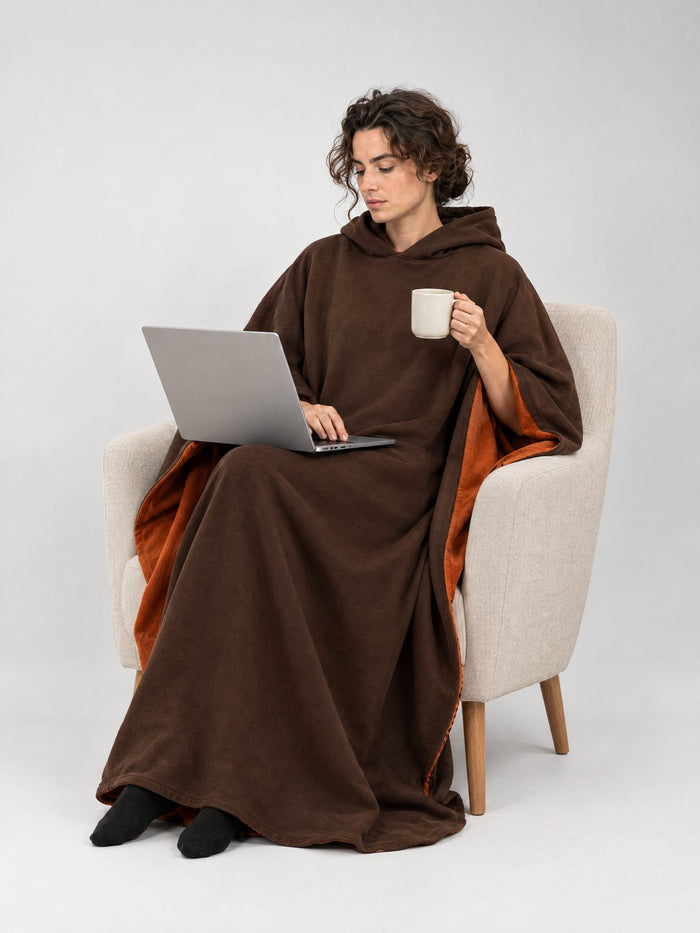
To stay warm in a van, insulate and cover the windows, sleep in a bag rated for the night's low on an insulated mat, and go to bed already warm. Never use a portable fuel-burning heater while you sleep in a van: US and UK safety bodies both warn against it, and a working carbon monoxide alarm is not optional. For the evening, sitting in the van, a long layer such as Enfold, the hooded cape we make, keeps you warm with no fuel at all. It is not a sleeping bag, and it never goes near a stove or a flame.
Carbon monoxide comes first
A van is a small, closed space, which is exactly what makes fuel-burning heat in one dangerous. Checked 16 November 2026:
- US Consumer Product Safety Commission: "Never use fuel-burning portable heaters or lanterns while sleeping in enclosed areas such as tents, campers and vehicles." And: "This is especially important at high altitudes, where the risk of carbon monoxide poisoning is increased" (CPSC).
- UK National Caravan Council, July 2026: "Portable gas heaters designed for outdoor use must never be used inside a campervan or any other enclosed space." And: "Ventilation provided as part of a campervan conversion is not designed to make portable outdoor heaters safe for indoor use" (NCC).
- CDC: "Never burn charcoal indoors." "Never use a portable gas camp stove indoors." "Have a mechanic check the exhaust system of your car or truck every year," because "A small leak in the exhaust system can lead to a buildup of CO inside the car" (CDC).
The CPSC lists the symptoms of carbon monoxide poisoning as "headache, dizziness, weakness, nausea, vomiting, sleepiness, and confusion," and warns it "can easily be mistaken for a cold or flu." Sleepiness is the cruel one in a van at night. Fit a battery carbon monoxide alarm where you sleep and test it regularly. If it sounds, or anyone has symptoms, get out into fresh air and call 911 or your local emergency number.
Ways to heat a van, compared
| Option | While you sleep? | Notes |
|---|---|---|
| Sleeping bag rated for the night's low, on an insulated mat | Yes | No fuel; the core of any winter van setup |
| Hot water bottle in a cover | Yes | Hot, not boiling; replace one that is old or perished |
| Diesel or gas heater fitted by the manufacturer or a qualified installer, vented outside | Only as its instructions allow | NCC: use "in accordance with the manufacturer's instructions"; keep a CO alarm |
| Electric heater on a hook-up | No: off when sleeping (CPSC) | Three feet from bedding; plug into a fixed outlet, not a power strip |
| Running the engine for heat while parked | No | An exhaust leak can build up CO inside (CDC) |
| Portable outdoor gas or propane heater | Never inside | NCC, CPSC |
| Charcoal or a camp stove | Never inside | CDC |
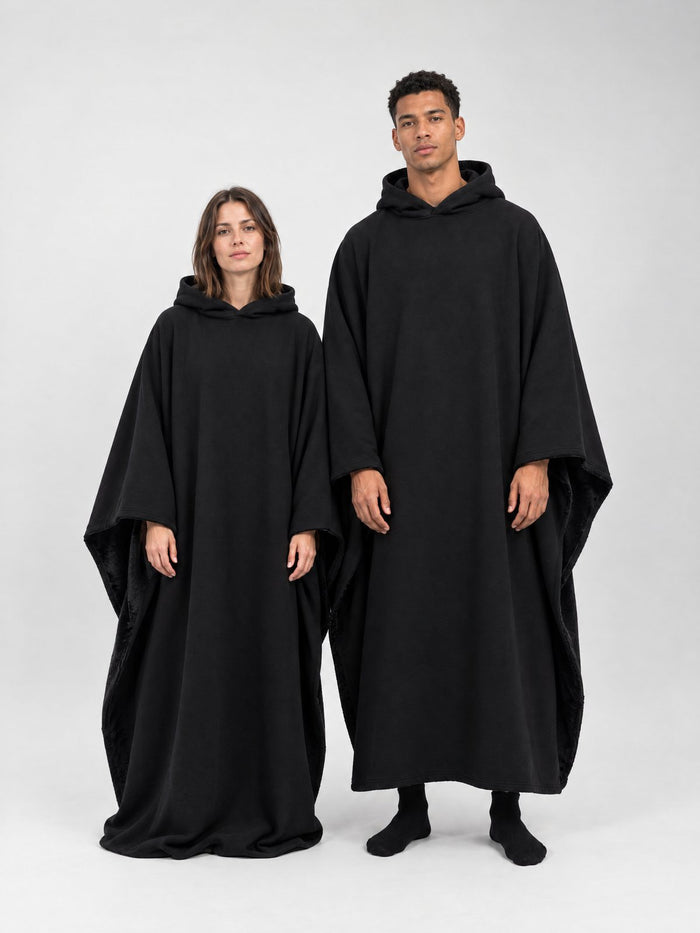
| Long layer for the evening (Enfold) | No: take it off for bed | For sitting only; away from stoves and flame |

Keep the heat in
Most of a van's heat leaves through the glass and the bare metal. Insulated window covers cut to fit, a heavy curtain behind the cab, and a rug or insulated floor do more than any heater. Park out of the wind where it is legal and safe, and keep the side door shut as much as you can.
Moisture is the trade-off. Your breath, wet boots and any cooking fill a small space with water vapor, which turns to condensation on cold glass and metal and leaves bedding damp. Keep a roof vent or a window cracked open, and wipe the windows each morning. Damp bedding is cold bedding.
Sleeping warm in a van
- Insulate underneath. A cold floor takes heat from you all night through a thin mattress. Put a foam mat under it.
- A bag rated for the low, not the average. A liner adds warmth and keeps the bag clean.
- Go to bed warm. Eat something, have a warm drink, fill a hot water bottle.
- Dry clothes. Change out of anything damp before you get in.
- A hat on the coldest nights.
Know when to stop. Ready.gov lists the signs of hypothermia as "Shivering, exhaustion, confusion, fumbling hands, memory loss, slurred speech or drowsiness," and says "A temperature below 95 degrees is an emergency" (Ready.gov). On a night colder than your setup is built for, a campground with hook-up, a hostel or a motel is the right call. For the same ideas in a house, see staying warm in bed without heating.
Evenings in the van
The evening is the cold part people forget: sitting on the bench reading, eating or watching something, too early for bed and too chilly in a jacket. That is the hour Enfold is for. It runs 56 inches (142 cm) from shoulder to hem, so on the bench your legs and feet are inside it. It is open down both sides with no sleeves, so your hands come out for a book or a mug, and the deep hood keeps the back of your neck warm. It needs no fuel and no battery.
Three rules. It is for sitting, not sleeping: take it off before you get into your sleeping bag. Never wear it while cooking, or anywhere near a stove, heater or flame. And take it off before you climb in and out of the van in the dark; a floor-length hem and a van step do not mix.
What you give up with Enfold
- It is not a sleeping bag. It is a long garment for sitting.
- It takes space. It folds, but it is a full-length garment and takes more room than a fleece.
- No sleeves, no pockets. Your head torch lives on a hook.
- One size. On shorter people the hem reaches the floor.
- Price. It costs more than a fleece throw. Get the sleep system right first.
If your evenings in the van are the cold part, see today's price for Enfold. Delivery is free; import taxes can apply in some countries.
Common questions
How do you stay warm sleeping in a van?
Insulate the windows and floor, sleep in a bag rated for the night's low on an insulated mat, go to bed warm and dry, and use a hot water bottle. Never run a portable fuel-burning heater while you sleep.
Is it safe to use a propane heater in a van overnight?
Not a portable one. The CPSC says never to use fuel-burning portable heaters while sleeping in vehicles, and the National Caravan Council says outdoor gas heaters must never be used inside a campervan. Fitted, vented heaters should be used only as their instructions allow, with a CO alarm.
Do I need a carbon monoxide alarm in a van?
If anything in or near the van burns fuel, yes. The National Caravan Council tells campervan users to regularly test and maintain theirs.
Can I sleep in Enfold in a van?
No. It is a long garment for sitting in the evening. Take it off before you get into your sleeping bag, and keep it away from stoves and flame.
더 읽어보기