How to Stay Warm in Bed Without Heating
Insulate the bed from below, get warm before you get in, and keep your head, neck and feet covered. For the rest of a winter without heating, warm yourself rather than the house, and keep the heating on for anyone who should not go without it.

本篇內容8
Last updated: 16 November 2026.
To stay warm in bed without heating, insulate the bed from below as well as above, get warm before you get in rather than after, and keep your head, neck and feet covered. A lot of the warmth you lose in a cold bed goes down into the mattress and out through the gap at your shoulders. Fix those two and the rest is easy.
This page is for choosing to go without heating, or a bedroom that is always cold. If the boiler has failed or the power is out on a freezing night, our guide to staying warm in a house without heat overnight covers the safety side first.
Insulate underneath you
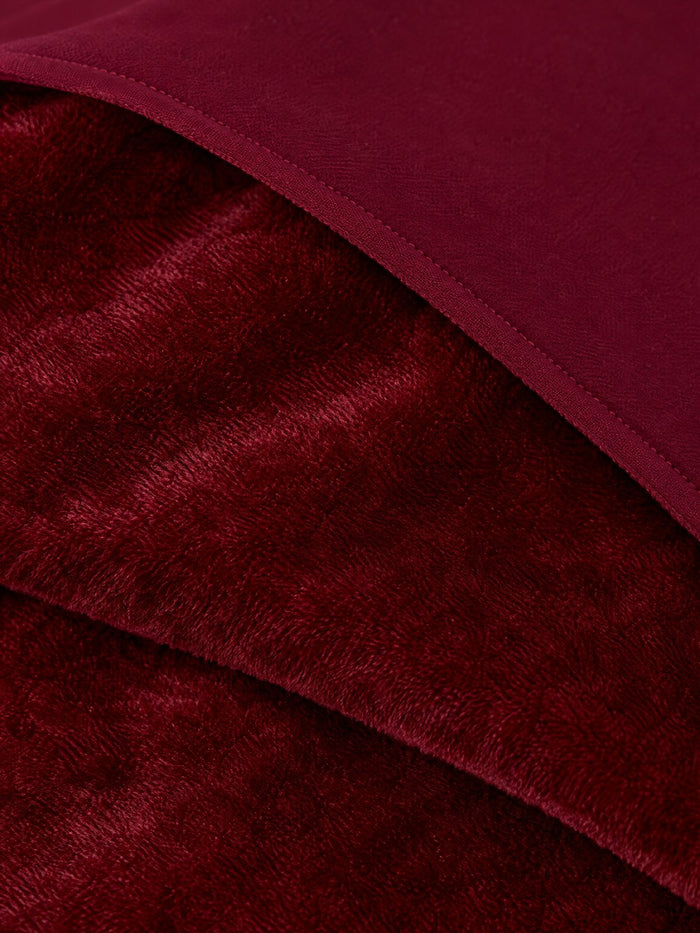
You can pile duvets on top and still wake cold, because the mattress below you is cold and you are lying on it. Put a layer between you and it: a wool blanket or a fleece throw under the fitted sheet, or a mattress topper. Brushed-cotton or flannel sheets feel warm the moment you get in, where crisp cotton feels cold. Then, on top, several lighter layers beat one heavy one, because each traps its own layer of air. Tuck the top layers in at the sides and pull the duvet up round your shoulders; the gap at the neck is where warm air leaves.
Get warm before you get in
A cold body in a cold bed takes a long time to warm either up. Go to bed already warm. There is some research behind the timing. A 2019 review in Sleep Medicine Reviews (Haghayegh and colleagues) pooled studies of warm baths and showers at about 40 to 42.5°C taken one to two hours before bed. The authors' own university summary says this shortened the time to fall asleep by an average of about 10 minutes. Those studies used baths and showers, not a garment or a warm room, so treat them as a reason to get warm well before bed, nothing more (PubMed).
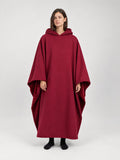
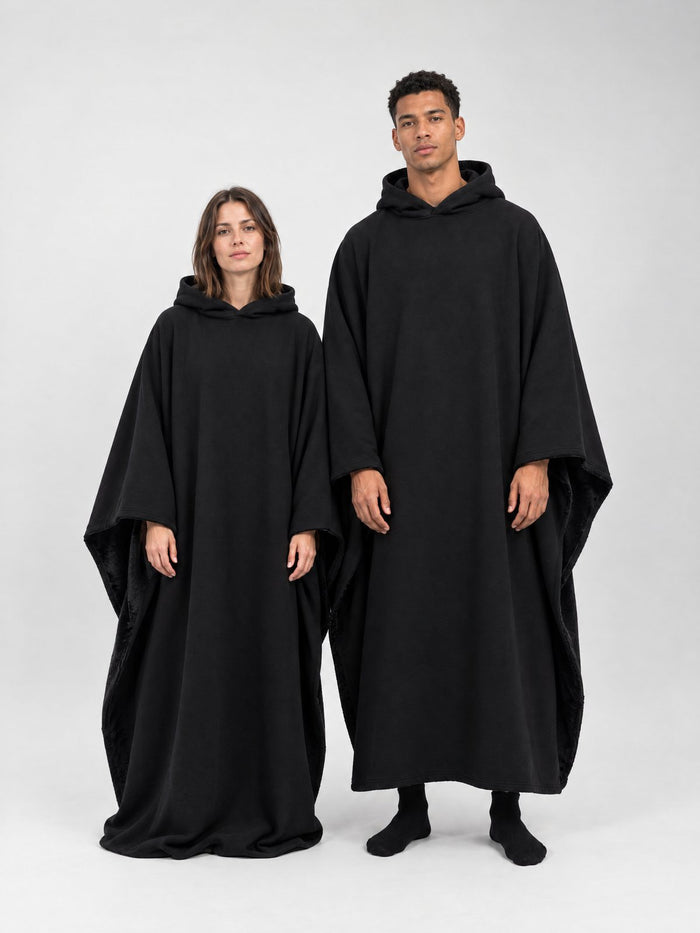
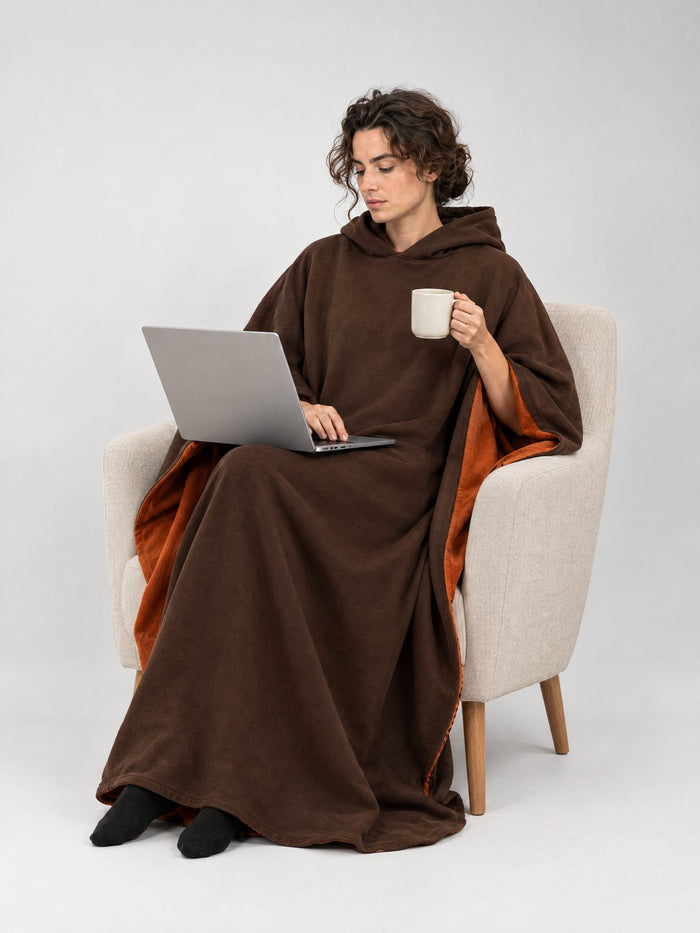
Without a bath, spend the last hour before bed somewhere warm and stay covered. That last hour on the sofa is where Enfold, the hooded cape we make, fits: it runs 56 inches (142 cm) from shoulder to hem, so you are covered from the hood to the feet while you read or watch something. Take it off at the bedside. It is a long garment made for sitting, and we do not suggest sleeping in it.
What to wear in bed
- Loose layers. Brushed-cotton pyjamas, with a thin long-sleeved layer underneath on the coldest nights.
- Socks. Loose wool bed socks, not the tight pair you wore all day.
- A soft hat in a very cold room, for adults. It feels silly and works.
- Not too much. If you sweat, the damp makes you colder by morning. Take a layer off rather than throwing the duvet back.
Bed warmers compared
| Option | Warms | Running cost | Watch out for |
|---|---|---|---|
| Hot water bottle | The bed before you get in, then your feet | A kettle of water | Hot, not boiling; replace one that is old or perished |
| Electric blanket | The whole bed | A little electricity | Follow the instructions; never use one that is damaged or damp |
| Heated mattress pad, one side | One sleeper | A little electricity | As above; useful when only one of you is cold |
| Microwavable wheat bag | Feet or lap for a while | A minute in the microwave | Heat exactly as the label says |
| An extra blanket underneath | All night | None | Nothing |
The bedroom itself
Close the curtains as it gets dark and keep the bedroom door shut. Move the bed away from an outside wall or a window if you can; cold surfaces pull heat from you even through the duvet. Block the draught under the door with a rolled towel.
Getting through winter without heating
The same idea works by day: warm yourself, not the house. Thin layers, a long layer over your legs and feet while you sit, a warm drink, and a few minutes of moving every hour. Our guide to heating the person, not the house puts numbers on the running costs, and explains who should not turn the heating off at all.
Going without heating is not safe for everyone. Older people, anyone unwell, and babies need a warm home. None of the advice on this page is for babies or young children: do not put a baby or small child to bed in a hood, a hat or a heavy garment, and follow your health service's safe-sleep guidance for them.
What a cape will not do
It keeps your own warmth around you while you sit; it does not heat a room or a bed. It has no sleeves and no pockets, it is one size, and on shorter people the hem reaches the floor, so it is not for hurrying up the stairs to bed. If the last hour of the evening is when you get cold, see today's price for Enfold.
Common questions
How can I stay warm in bed without heating?
Put a blanket under you as well as over you, use flannel sheets and several lighter layers, wear loose socks and a soft hat, warm the bed with a hot water bottle, and go to bed already warm.
How do I stay warm in winter without heating?
Warm yourself rather than the room: thin layers, a long layer over your legs and feet when you sit, warm food and drinks, and moving every hour. Keep the heating on if anyone in the house is elderly, unwell or a baby.
Does a warm bath before bed help?
A 2019 review found warm baths or showers one to two hours before bed were linked to falling asleep a little faster. Those studies were about baths and showers, not clothing.
Should I wear socks to bed?
If your feet are cold, yes: loose wool bed socks. Take them off if your feet get hot or damp.
延伸閱讀