How to Save Money on Heating This Winter
Turn the thermostat down while you sleep or are out, seal air leaks, close the curtains at night and keep the furnace filter clean. The US Department of Energy puts a 7 to 10°F setback for 8 hours a day at as much as 10% a year on heating and cooling, and sealing air leaks at 10 to 20%; then warm yourself rather than every room.

本篇內容9
Last updated: 16 November 2026.
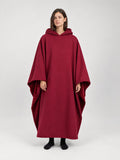
The heating savings that hold up are unglamorous: turn the thermostat down while you sleep or are out, seal the air leaks, close the curtains at night, and keep the system clean. The Department of Energy's own figures put the first two at up to 10% and 10 to 20% of heating and cooling bills. Then stop paying to heat rooms nobody is sitting in, and warm yourself instead, with layers and a long layer on the sofa such as Enfold, the hooded cape we make.
What this winter looks like
The US Energy Information Administration's winter outlook, released October 6, 2026, splits by fuel. Households that heat mainly with natural gas or propane, "about half of households," are expected to spend less this winter than last. Households "that primarily use electricity or heating oil for space heating are expected to spend more," and "EIA forecasts homes using heating oil will pay about 21% more for the fuel than last winter" (EIA, checked 16 November 2026). Whatever your fuel, the moves below cut how much you burn.
The moves, and what the DOE says they save
| Move | DOE figure | Cost to you | Notes |
|---|---|---|---|
| Thermostat down 7 to 10°F for 8 hours a day | "as much as 10% per year on heating and cooling" | Free; a programmable thermostat helps | Heat pumps: see below |
| Seal air leaks | "10%–20% on your heating and cooling bills" | Low | Leave appliance vents alone |
| Low-e storm windows | "10%-30% on heating and cooling costs," depending on the windows you have | High | For single-pane or poor windows |
| Seal and insulate ducts in the attic or crawl space | Leaky ducts there "can add hundreds of dollars a year" | Medium, usually a pro | Ducts in unheated spaces |
| New system plus insulation, air sealing and thermostat settings | "about 30%" off heating and cooling bills | High | Only when the old system is due |
| Curtains closed at night, open by day | No figure given | Free | South-facing windows by day |
| Clean or replace furnace filters | No figure given | Low | "once a month or as recommended" |
| Warm the person, not every room | Not measured by the DOE | Low to higher | Layers, rugs, a long layer while you sit |
Every DOE figure and quote on this page is from its Energy Saver guide or Energy Saver bulletin, checked 16 November 2026. "As much as" is a ceiling, not a promise.
The thermostat
The DOE: "You can save as much as 10% per year on heating and cooling by turning your thermostat down 7°–10°F for 8 hours a day in the fall and winter." The easiest 8 hours are the ones you spend asleep or out. For the hours you are home, its Energy Saver team recommends "starting around 68° to 70°F and adjusting from there, as needed." A programmable or smart thermostat does the remembering. The exception: "If you have a heat pump, don't do this without a smart or programmable thermostat designed for use with heat pumps," because a manual setback can switch on backup electric-resistance heat, which the DOE says "is more expensive." Night settings in detail: what temperature to set the thermostat at night in winter.
Leaks, windows and the furnace
Air leaks are, in the DOE's words, "among the greatest sources of energy loss in a home." Weatherstrip doors and windows, put foam gaskets behind outlet and switch plates on outside walls, caulk gaps around trim and baseboards, and close the fireplace damper when there is no fire. Our guide to keeping warm in a drafty house walks through finding the leaks.
Then the free habits. "Close your curtains and shades at night to protect against cold drafts; open them during the day to let in warming sunlight." Keep radiators and registers clear of furniture, carpet and drapes. "Clean or replace filters on furnaces once a month or as recommended."
Heat the person, not the house
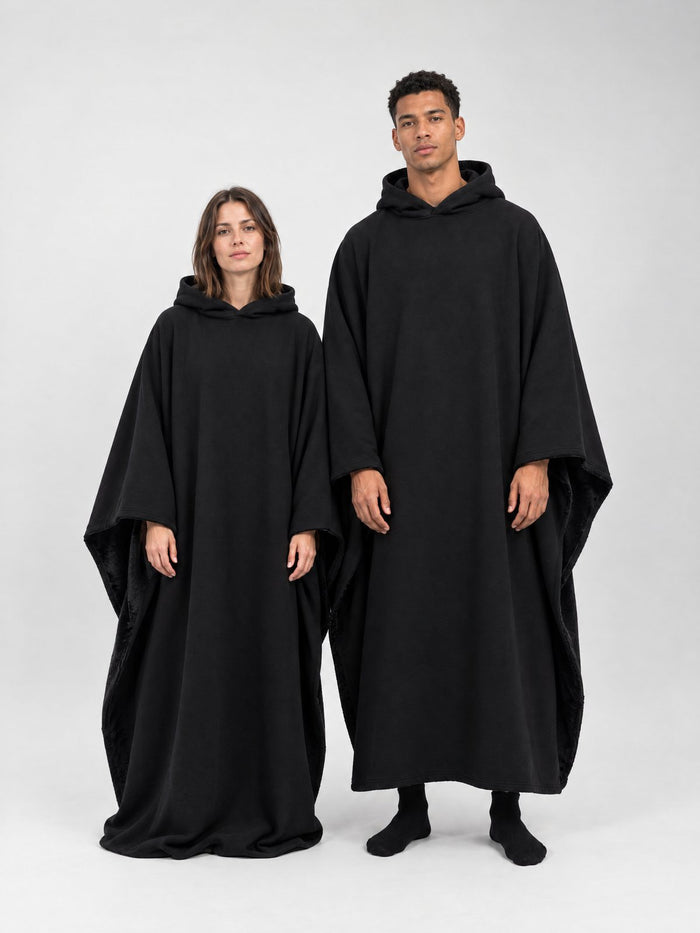
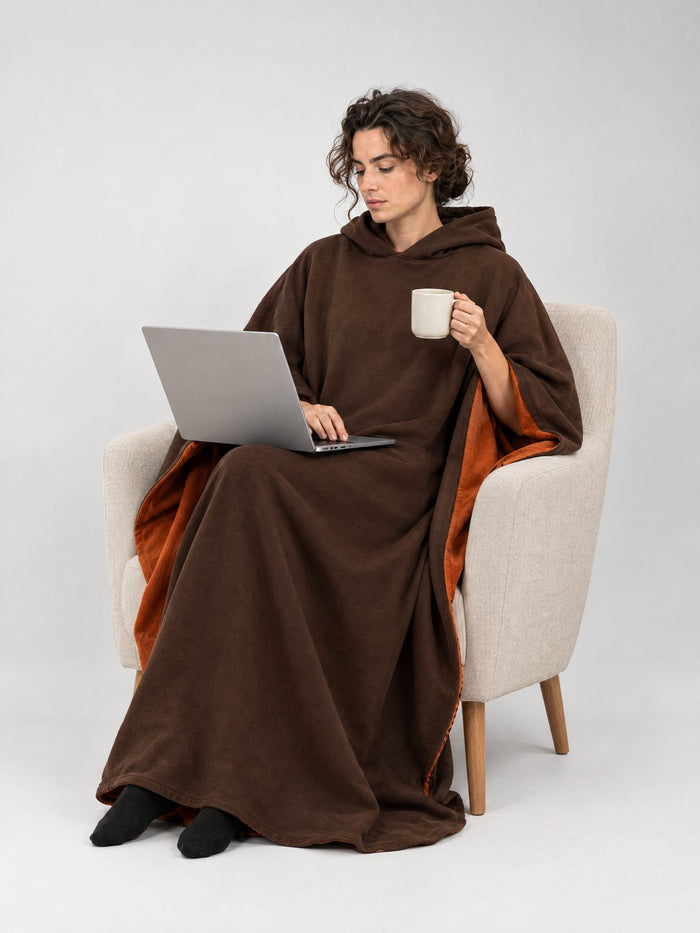
A furnace heats every room, including the empty ones. Cooler hours are easier when you are warm: thin layers, a hat or hood, wool socks, a rug where you sit. The long layer is the piece most people are missing. Enfold runs 56 inches (142 cm) from shoulder to hem, so on the sofa your legs and feet are inside it. It is open down both sides with no sleeves, so your hands come out for a book or a laptop, and the deep hood keeps your neck warm. It needs no power. The full argument is in heat the person, not the house.
In the UK
The NHS says to heat your home "to a temperature that's comfortable for you" and, if you can, to "at least 18°C in the rooms that you regularly use, such as your living room and bedroom." It points to "grants, benefits and advice" for making a home more energy efficient, and a government helpline on 0800 444 202 (NHS). Ofgem explains how the energy price cap works on its price cap page; check the current level there rather than trusting a figure in an article.
Who should not cut back
Some savings are not worth a cold house. The NHS names people aged 65 and older, and babies and children under 5, among those more vulnerable to cold weather. If someone at home is in those groups, or unwell, keep their rooms warm and save elsewhere. In the US, if paying for heat is the problem, ask your utility about payment plans and your state about the federal Low Income Home Energy Assistance Program before you turn the heat off.
What you give up with Enfold
- It makes no heat. It keeps yours in.
- No sleeves, no pockets. Some people prefer cuffs for long typing sessions.
- One size. On shorter people the hem reaches the floor; take stairs slowly.
- Price. It costs more than socks and weatherstripping, which come first.
- Where not to wear it. Never near a fire, candle or space heater. Not for babies, young children or wheelchair users.
If your plan is to turn the heat down and stay warm on the sofa, see today's price for Enfold.
Common questions
What is the cheapest way to save on heating in winter?
Turn the thermostat down 7 to 10°F while you sleep or are out, and seal air leaks. The Department of Energy puts those at up to 10% and 10 to 20% of heating and cooling bills, and neither costs much.
Does turning the heat down at night save money?
Yes. The DOE says a 7 to 10°F setback for 8 hours a day can save as much as 10% a year on heating and cooling. With a heat pump, use a thermostat designed for heat pumps first.
Is it cheaper to leave the heat on low all day?
The Department of Energy's guidance points the other way: set the thermostat back for at least 8 hours a day. Heat pumps are the exception that needs a compatible thermostat.
How much can I save by sealing drafts?
The DOE says sealing uncontrolled air leaks can save 10 to 20% on heating and cooling bills. Leave appliance vents and extractor fans unsealed.
延伸閱讀