How to Keep an Apartment Warm in Winter When You Don't Control the Heat
Stop the drafts first: window film, a door sweep and a rug do the most for the least. Keep radiators and baseboards clear, heat one small area safely, and dress your legs and feet. If the unit stays below your local minimum, it is your landlord's problem to fix.

I denne guiden6
Last updated: 6 November 2026.
In a rental you often cannot change the windows, the insulation or sometimes even the thermostat. The good news is that most of the cold you feel comes from a few places you can do something about. These fixes are cheap, they come off when you move out, and they are in rough order of what helps most.
Stop the cold air coming in
- Put film on the windows. Shrink-film kits cost little, go on with double-sided tape and a hair dryer, and stop the draft you feel from old frames. Test the tape on a small spot first if you are worried about your deposit.
- Block the gap under the door. A draft snake or stick-on door sweep helps most on doors to a hallway or the outside.
- Seal the small leaks. Removable weatherstrip works around window sashes. Foam gaskets behind outlet plates on outside walls are cheap, though leave anything electrical alone if you are unsure.
- Use heavy curtains at night. Close them at sunset and open them on sunny days, when the sun is free heat. Keep curtains clear of heaters.
Make the heat you have work better
- Clear the baseboards and radiators. A couch or long curtain in front of one keeps the heat from moving into the room. Leave a gap.
- Use a fan on low. Warm air collects at the ceiling. A ceiling fan on a low reverse setting pushes it back down.
- Close off rooms you do not use. Shut the door to a spare room if your heating system allows it, and put your time in one room.
Warm the floor and yourself
- Put down a rug. Bare floors, and especially basement units, take heat from your feet. A thick rug with a pad under it changes how a room feels at the same temperature.
- Move your seat away from the window. A cold window pulls heat from your body even when the air is warm. Moving the couch a metre or two can do more than turning up the heat. Our guide on why you feel cold at home explains why.
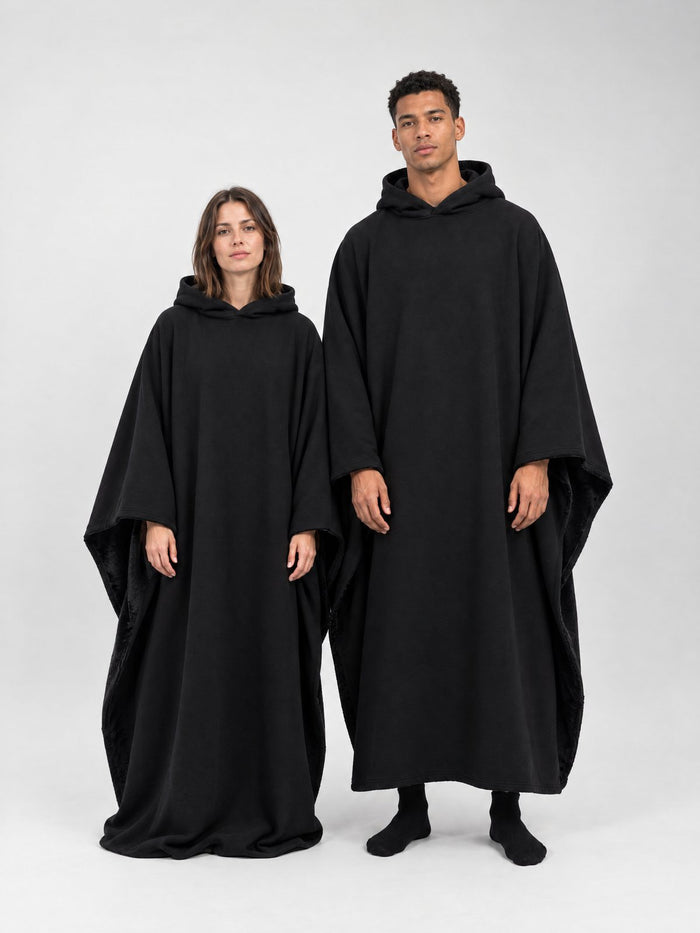
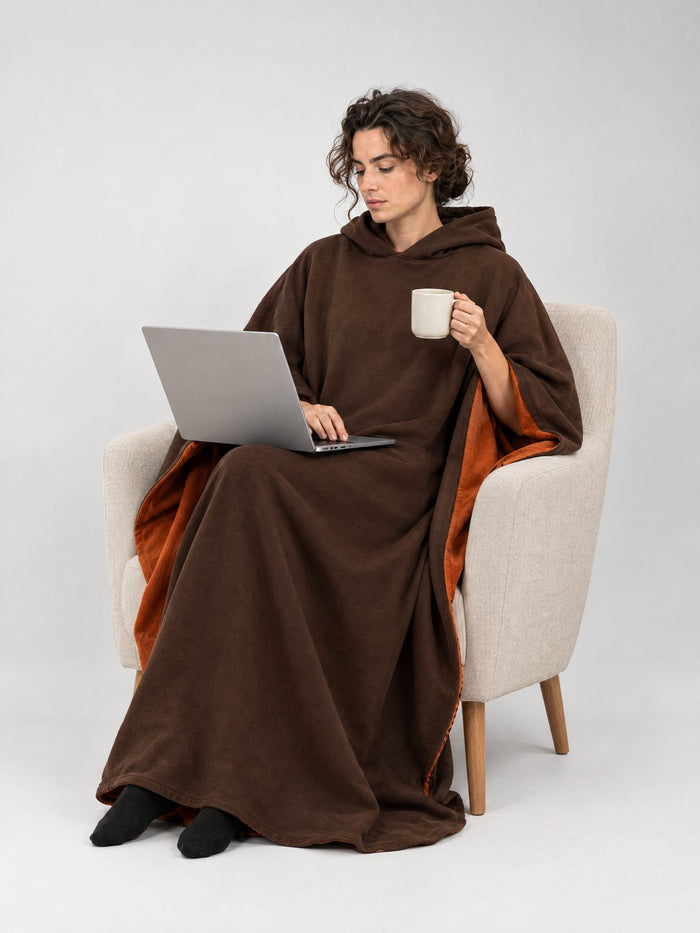
- Dress your legs, not just your top half. Most layers stop at the waist, and the cold air sits low. Thick socks and slippers help, and so does something long. A floor-length hooded cape like Enfold, which we sell, stays on when you get up. A long blanket and thick socks do much of the same job for less.
Space heaters, and what never to use
A small electric heater can warm one room without heating the whole unit. Our running-costs guide has the numbers. Choose one with tip-over and overheat shut-off, plug it straight into the wall, and keep it about a metre from anything that can burn. Turn it off when you go to sleep or leave.
Never heat your home with an oven, a gas stove, a barbecue or an outdoor propane heater. They can start fires and produce carbon monoxide, which you cannot smell. Make sure your carbon monoxide alarm works.
When it is your landlord's job
If you do not control the heat, many places set a minimum your landlord has to keep. Rules differ by city and province. Toronto, for example, requires at least 21°C during the heating season. Search your city's name plus "minimum heat by-law", write down the temperature and the date, and send your landlord a dated message. If nothing changes, your city's property standards office or your local tenant board can tell you what comes next.
Common questions
How do I keep a basement apartment warm in winter?
Start with the floor, since that is where the cold comes from: thick rugs with pads, slippers and a raised seat. Then block drafts at any windows and at the door to the stairs. Keep an eye on damp, because a cold basement can grow mould.
What is the cheapest way to keep an apartment warm?
Window film, a door draft blocker and closing the curtains at night cost little and work straight away. After that, warm yourself rather than the air.
Why is my apartment so cold even with the heat on?
Usually it is drafts, cold windows or furniture blocking the heater. A thermostat reads the air in one spot, while your body also feels cold walls and floors.
Does a landlord have to provide heat?
In most Canadian cities and many other places, yes, up to a set minimum during the cold months. Check your own city's rules, because the number and the dates differ.
Les videre