What Temperature to Set Your Thermostat at Night in Winter
The Department of Energy suggests about 68 to 70°F while you are home and awake, and turning it down 7 to 10°F for 8 hours a day, such as overnight, which it says can save as much as 10% a year on heating and cooling. That works out to roughly 58 to 63°F at night for healthy adults; keep it warmer for babies, older people and anyone unwell, and check your thermostat first if you have a heat pump.

Dans ce guide8
Last updated: 16 November 2026.
For most healthy adults with a furnace or boiler, set the thermostat around 68 to 70°F while you are up, and 7 to 10°F lower overnight. That is the Department of Energy's guidance, and it says the setback can save as much as 10% a year on heating and cooling. In practice that means roughly 58 to 63°F at night. Homes with babies, older people or anyone unwell need it warmer, and heat pumps need the right thermostat first.
What the Department of Energy says
Two lines from the DOE's Energy Saver team, checked 16 November 2026:
- For the hours you are home: "We recommend starting around 68° to 70°F and adjusting from there, as needed" (DOE Energy Saver bulletin).
- For the setback: "You can save as much as 10% per year on heating and cooling by turning your thermostat down 7°–10°F for 8 hours a day in the fall and winter" (DOE Energy Saver guide).
Night is the natural 8 hours: you are under a duvet, not sitting still in a cool room. Take 7 to 10°F off 68 to 70°F and you get about 58 to 63°F (roughly 14 to 17°C). That range is our arithmetic, not a DOE figure. Start at the top of it and go down a degree at a time while you still sleep comfortably.
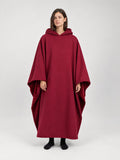
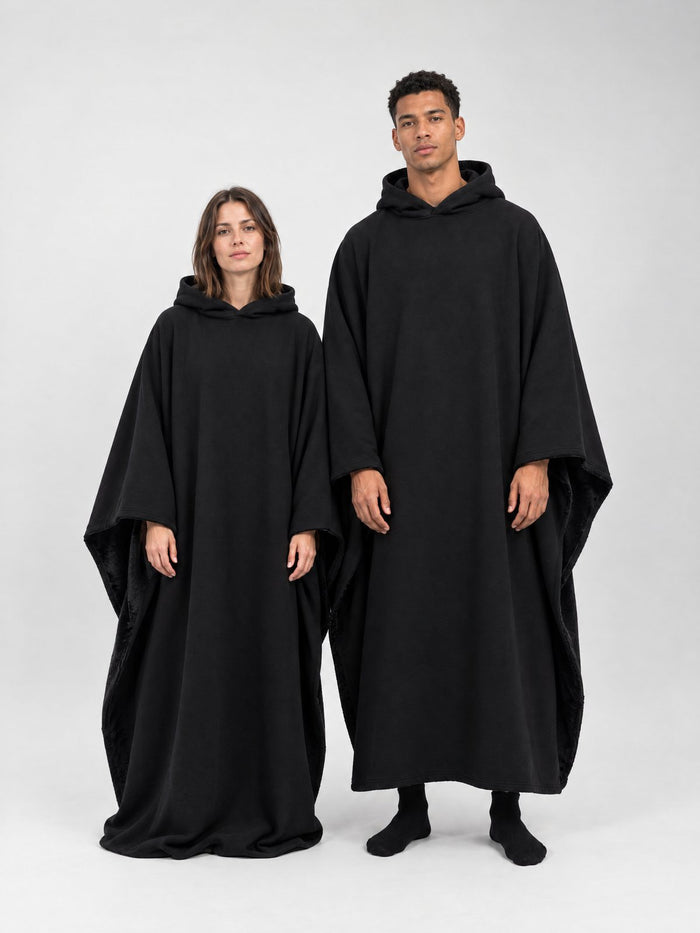
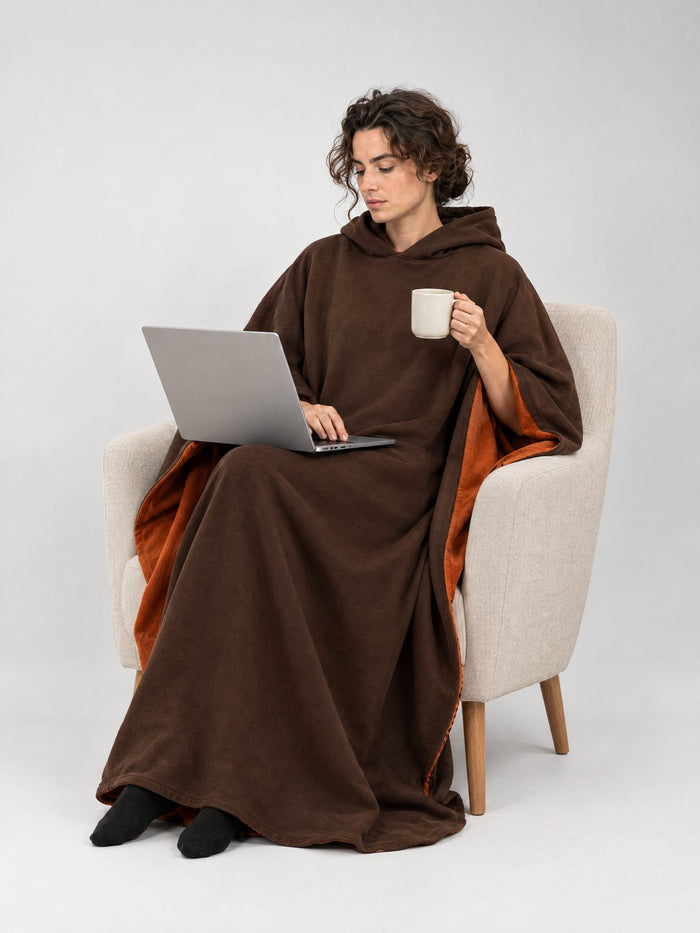
The setback can start before bed, too, if you are warm. The last hour on the sofa is where Enfold, the hooded cape we make, fits: 56 inches (142 cm) from shoulder to hem, so your legs and feet are covered, with a deep hood and open sides for a book or a mug. Take it off at the bedside; it is made for sitting, not for sleeping in.
Night settings, by household
| Household | Where to start at night | Source |
|---|---|---|
| Healthy adults, furnace or boiler | 7 to 10°F below your daytime setting; about 58 to 63°F if you run 68 to 70°F by day | DOE (range is our arithmetic) |
| Heat pump | No manual setback that brings on backup electric heat; use a thermostat designed for heat pumps | DOE |
| Someone aged 65 or over, or unwell | At least 18°C (about 64°F) in the rooms they use, including the bedroom | NHS |
| A baby's room | About 16 to 20°C (about 61 to 68°F) | NHS |
| Bedroom windows | "It's best to keep your bedroom windows closed at night." | NHS |
Heat pumps are different
The DOE attaches a condition to the setback: "If you have a heat pump, don't do this without a smart or programmable thermostat designed for use with heat pumps." Its heat pump advice is direct: "Do not set back the heat pump's thermostat manually if it causes backup electric-resistance heating to come on. This type of heating is more expensive." If you are not sure whether your thermostat is made for a heat pump, ask the installer before you schedule a big night setback.
Babies, older people and anyone unwell
Energy guidance is about money; health guidance is about people. Where they differ, follow the health guidance for the people it covers. The NHS says to heat your home to a comfortable temperature and, if you can, to "at least 18°C in the rooms that you regularly use, such as your living room and bedroom." It names people aged 65 and older, and babies and children under 5, among those more vulnerable to cold weather (NHS, keep warm).
For a baby's room, the NHS safe-sleep page says to "keep the room at a temperature between about 16 to 20C," and "Babies should never sleep with a hot water bottle or electric blanket" (NHS, SIDS). In the US, ask your pediatrician or doctor. We make a garment and cannot advise on anyone's health. Heat the rooms those people use to their level and set back the rest.
Make a cooler bedroom comfortable
A cooler bedroom is easy when the bed is warm. Put a blanket under you as well as over you, use flannel sheets, wear loose wool socks, and warm the bed with a hot water bottle before you get in (adults only). Our guide to staying warm in bed without heating goes through it layer by layer.
Go to bed already warm. The University of Texas at Austin's summary of a 2019 review in Sleep Medicine Reviews (Haghayegh and colleagues) describes bathing "1-2 hours before bedtime in water of about 104-109 degrees Fahrenheit," and says that, scheduled that way, it can "hasten the speed of falling asleep by an average of 10 minutes" (UT Austin). Those studies used baths and showers, not a warm room or a garment, so read them as a reason to get warm well before bed, nothing more.
Set the schedule once
A programmable or smart thermostat makes the setback automatic. The DOE describes smart thermostats setting a schedule that "automatically adjusts to energy-saving temperatures when you are asleep or away." Start the setback when you go to bed, or earlier if you are covered up on the sofa, and bring the heat back shortly before you get up so you are not dressing in the cold. The DOE's figure is for 8 hours a day: the hours you are out count as well as the hours you are asleep. The wider list of heating savings is in how to save money on heating.
What a cape will not do
- Heat the room. It keeps your own warmth around you while you sit; the bedroom still needs a warm bed.
- Go to bed with you. It is a long garment for sitting and pottering, not for sleeping in.
- Fit everyone the same. One size; on shorter people the hem reaches the floor, so not for hurrying upstairs.
- Sleeves and pockets. There are none.
- Suit everyone. Not for babies or young children, and not for wheelchair users.
If the setback is the plan and the evenings are the cold part, see today's price for Enfold.
Common questions
What temperature should I set my thermostat at night in winter?
The DOE suggests about 68 to 70°F when you are home and up, set back 7 to 10°F for 8 hours, which works out to roughly 58 to 63°F overnight. Keep it warmer if anyone at home is elderly, very young or unwell.
Does turning the thermostat down at night save money?
The DOE says a 7 to 10°F setback for 8 hours a day can save as much as 10% a year on heating and cooling. With a heat pump, use a thermostat designed for heat pumps first.
What temperature should a baby's room be at night?
The NHS says about 16 to 20°C, roughly 61 to 68°F, and that babies should never sleep with a hot water bottle or electric blanket. In the US, ask your pediatrician.
How warm should an older person's home be?
The NHS advises at least 18°C, about 64°F, in the rooms used regularly, including the bedroom, and names people aged 65 and older as more vulnerable to cold. Do not set back the rooms they use.
À lire aussi