How to Stay Warm During a Power Outage (Safely)
Shrink the space you are keeping warm and wear your heat: one small room with the door shut, layers, a hat, dry socks and blankets. Never use a gas stove, oven, grill or generator indoors for heat, because of carbon monoxide; if it is extremely cold, go somewhere with power.

Tässä oppaassa9
Last updated: 16 November 2026.
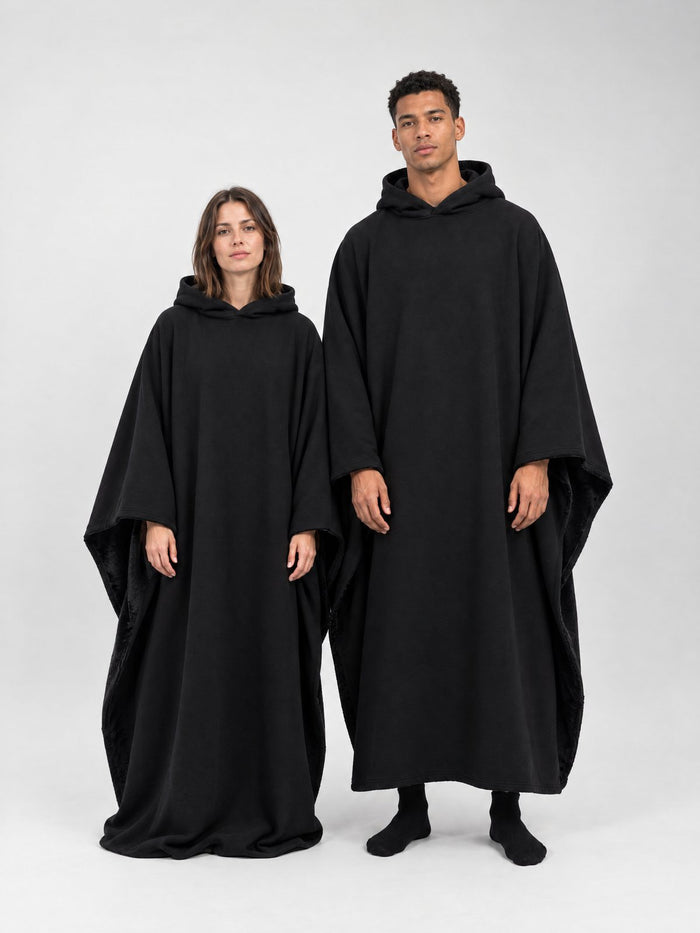
In a winter power outage, keep the heat you have and wear the rest: move everyone into one small room, shut the door, put on layers and a hat, and get under blankets or a long wearable such as Enfold, the hooded cape we make, which needs no power. Never heat the house with a gas stove, oven, grill or generator. If the cold is extreme or the outage drags on, go somewhere with power.
The rule that comes first
The danger in a winter outage is usually carbon monoxide, and it comes from people trying to stay warm. The US government guidance is blunt:
- Ready.gov: "Do not use a gas stove or oven to heat your home."
- CDC: "Never use a generator inside your home or garage, even if doors and windows are open." Use it outside, "more than 20 feet away from any windows, doors, and vents."
- CDC: "Never burn charcoal indoors." "Never use a portable gas camp stove indoors."
Carbon monoxide has no color and no smell. The CDC lists the most common symptoms as headache, dizziness, weakness, upset stomach, vomiting, chest pain and confusion. If anyone has them, get everyone into fresh air and call 911 (or your local emergency number). A battery-powered or battery-backup CO alarm near where people sleep is worth buying before the next storm. Sources, checked 16 November 2026: Ready.gov, power outages and CDC, carbon monoxide.
What to use for warmth, and what never to use
| Source of warmth | Indoors during an outage? | Notes |
|---|---|---|
| Layers, hats, blankets, a long wearable | Yes | No power, no fuel, nothing to vent |
| Hot water bottle | Yes, if you have a safe way to heat water | Hot, not boiling; check it for cracks |
| Hand warmers | Yes | Charge rechargeable ones before a storm |
| Wood stove or fireplace | Only if vented and maintained | CDC: "Don't cook or burn anything on a stove or fireplace that isn't vented." |
| Gas stove or oven | Never for heat | Carbon monoxide (Ready.gov, CDC) |
| Generator | Outdoors only, more than 20 feet from openings | Never in the garage (CDC) |
| Charcoal grill, camp stove | Never | CDC |
| Portable flameless chemical heater | No | CDC: "Do not use portable flameless chemical heaters indoors." |


Close the house down to one room
Heat leaks out of every room you are not using. Choose one: small, on the inside of the house if you can, with as little window as possible. Shut the doors to the rest of the house. Lay a towel along the bottom of the door. Hang a blanket over a large window at dusk; if the sun is out during the day, open the curtains on the sunny side and close them again before it sets. Bring everyone, pets included, into that room. People make heat, and a small room holds it.
Wear the heat
- Thin layers, not one thick one. If you get sweaty clearing snow, change the base layer; damp clothes lose heat fast.
- A hat or hood indoors. It feels odd for about five minutes.
- Dry wool socks and a soled slipper or shoe. The floor is the coldest surface in the room.
- A long layer over everything while you sit. Enfold runs 56 inches (142 cm) from shoulder to hem, so your legs and feet are inside it when you sit, with a deep hood and open sides for your hands. A long robe or a sleeping bag worn around the shoulders does a similar job.
Light without flame
Ready.gov's advice is to "have flashlights for every household member." Candles are tempting in a dark, cold house. If you use them, never leave them unattended, keep them away from curtains and bedding, and keep blankets, sleeping bags and long garments well clear. A floor-length cape and an open flame should never be close.
Keep the heat you make
Eat regularly, have something warm to drink if you can make it safely, and stand up and move for a few minutes every hour. When it gets late, our guide to staying warm in a house without heat overnight covers the bed and the night itself.
When to leave
Ready.gov says: "Go to a community location with power if heat or cold is extreme," and "Check with local officials about heating and cooling locations open near you." Know the warning signs of hypothermia, which Ready.gov lists as "Shivering, exhaustion, confusion, fumbling hands, memory loss, slurred speech or drowsiness" (Ready.gov, winter weather). Those are a reason to call 911. Check on older neighbors and anyone living alone.
What a wearable blanket will not do
It keeps your own heat in; it does not make any. In a house that keeps cooling over days, a warm building is the answer, not a better garment. It is for sitting and pottering, not for carrying things up and down dark stairs. It is not for babies or young children. And it must stay away from candles, fireplaces and stoves. If you are putting together a kit before the next storm, see today's price for Enfold.
Common questions
How do you stay warm when the power goes out in winter?
Move everyone into one small room with the door shut, wear thin layers with a hat and dry socks, sit under blankets or a long wearable, and keep moving a little every hour. If it gets extreme, go to a warming location.
Can I use my gas oven to heat the house during a power outage?
No. Ready.gov and the CDC both say never to heat your home with a gas stove or oven, because of the risk of carbon monoxide poisoning.
Is it safe to run a generator in the garage?
No. The CDC says never to use a generator inside your home or garage, even with doors and windows open, and to keep it more than 20 feet from windows, doors and vents.
When should I go to a warming center?
When the cold is extreme, the outage is long, or anyone shows signs of hypothermia. Ready.gov advises checking with local officials for heating locations near you.
Lue lisää