How to Keep Warm in a Drafty House
Stop the drafts before you add heat: find the leaks around windows, doors, outlets and the attic hatch and seal them, close the curtains at night, and block the gaps under doors. Then warm yourself rather than the whole house, with layers, warm feet and a long hooded layer while you sit.

En esta guía9
Last updated: 16 November 2026.
In a drafty house, the cheapest heat is the heat you stop losing. Find the drafts and seal them, close the curtains at night, block the gaps under doors, and only then think about turning the heat up. While the house catches up, warm yourself: thin layers, warm feet, and a long layer with a hood while you sit, such as Enfold, the hooded cape we make.
Find the drafts
The Department of Energy calls air leaks "among the greatest sources of energy loss in a home." To find them, it says to "check around your walls, ceilings, windows, doors, lighting and plumbing fixtures, switches, and electrical outlets." On a windy day, it suggests carefully holding a lit incense stick or a smoke pen near windows, doors, outlets, ceiling fixtures and attic hatches: "If the smoke stream travels horizontally, you have located an air leak" (DOE Energy Saver guide, checked 16 November 2026). Keep the incense away from curtains, and put it out when you are done.
The DOE's map of where to seal also includes door and window frames, the attic entrance, recessed lights, sill plates, and every place plumbing, ducts or wiring come through a wall or floor.
Draft fixes, compared
| Fix | Where | Fine for renters? | Effort |
|---|---|---|---|
| Weatherstripping | Door and window frames | Usually, if removable | An afternoon |
| Door sweep or draft stopper | Gap under exterior doors | A draft stopper, yes | Minutes |
| Foam gaskets behind outlet and switch plates | Outside walls | Ask first | Minutes each, power off |
| Caulk or foam sealant | Gaps around trim, baseboards and pipes | Ask first | An afternoon |
| Close the damper or fit a chimney balloon | A fireplace you are not using | Yes | Minutes |
| Thick curtains or insulated shades, closed at night | Windows | Yes | Minutes a day |
| Low-e window film | Single-pane or drafty windows | Usually | An afternoon |
| Long hooded layer (Enfold) | You, while you sit | Yes | None |


Seal what should be sealed, and leave what should breathe
The DOE says "By sealing uncontrolled air leaks, you can save 10%–20% on your heating and cooling bills." Its to-do list: "Weatherstrip doors and windows." "Install foam gaskets behind outlet and switch plates on walls." Use foam sealant on larger gaps around window trim and baseboards. "Check the fireplace dampers to make certain they properly close," and consider an inflatable chimney balloon in a fireplace you are not using.
Leave alone what is meant to breathe: bathroom and kitchen fans, vents that supply air to a furnace, boiler or gas water heater, and any vent put there on purpose. The DOE says to seal around fireplace chimneys, furnaces and gas water heater vents only "with fire-resistant materials such as sheet metal or sheetrock and furnace cement caulk." A tighter house with gas appliances is a good reason to have them serviced every year and to keep working carbon monoxide detectors; the CDC advises battery-operated or battery back-up detectors "near every sleeping area in your home" (CDC).
Windows and curtains
A cold pane chills the air next to it, and that air falls to the floor, so windows feel drafty even when sealed. The DOE's cold-weather advice: "Close your curtains and shades at night to protect against cold drafts; open them during the day to let in warming sunlight." For windows that still feel drafty after weatherizing, it suggests "tight-fitting, insulating window shades," low-e film on the inside of the glass, or storm windows. Keep them off radiators and heating registers, which the DOE says should not be "blocked by furniture, carpeting, or drapes."
If you rent
Draft stoppers, removable weatherstripping, heavy curtains on tension rods, rugs and peel-off window film need no landlord. Ask before you caulk or foam, and report drafty windows and doors in writing. Our guide to keeping an apartment warm in winter has more renter-friendly fixes.
Warm yourself while the house catches up
A drafty house feels colder than its thermostat says, because moving air carries heat off your skin and cold walls and windows pull heat from you across the room. That is why you can be cold in a room the thermostat calls warm; we go into it in why you feel cold at home.
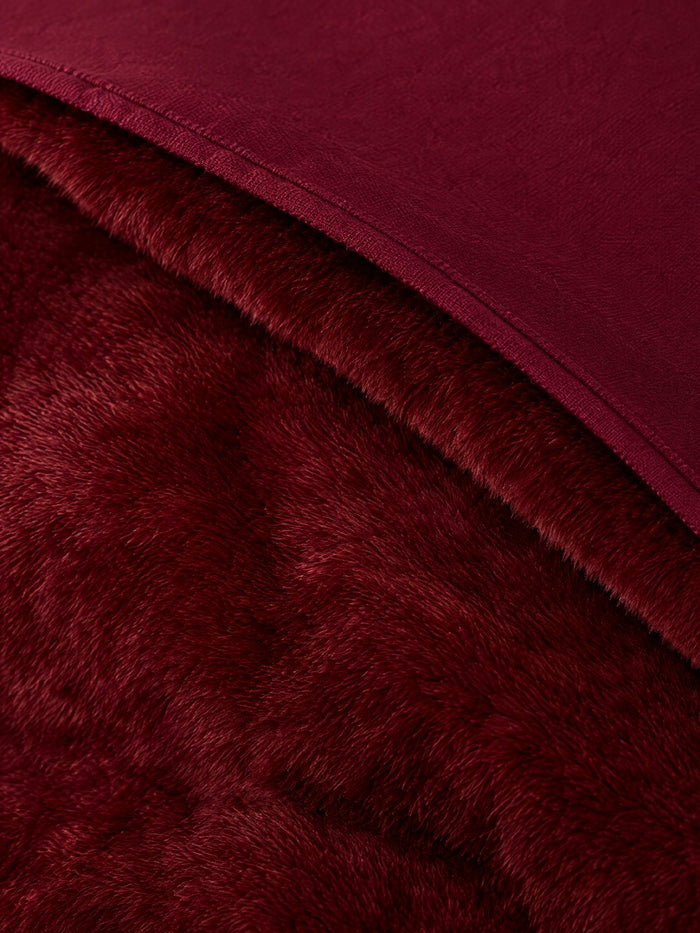
Drafts find gaps: a front zip, the neck, the ankles. The front of Enfold is one continuous panel with no zip and no slit, so there is no opening for a draft. The deep hood covers the back of your neck. It runs 56 inches (142 cm) from shoulder to hem, so when you sit, your legs and feet are inside it. It is open down both sides with no sleeves, so your hands come out for a book or a laptop. The outside is a matte cotton-blend fleece and the lining a soft plush.
If the whole house is cold, not just drafty
Pick one room to keep warm, shut its door and spend your evenings there. In the UK, the NHS says to heat your home "to a temperature that's comfortable for you," and "If you can, this should be at least 18°C in the rooms that you regularly use, such as your living room and bedroom." That is about 64°F. It names people aged 65 and older, and babies and children under 5, among those more vulnerable to cold weather (NHS). If anyone in your home is in those groups, or is unwell, keep the heat on for them rather than relying on layers.
What you give up with Enfold
- It makes no heat. It keeps yours in. Sealing the house comes first.
- No sleeves, no pockets. Your arms come out through the open sides; your phone goes on the arm of the chair.
- One size. On shorter people the hem reaches the floor, so take stairs slowly in it.
- Price. It costs more than a draft stopper and a roll of weatherstripping. Do those first.
- Where not to wear it. Never near an open fire, a candle or a space heater. Not for babies or young children, and not for wheelchair users.
Once the drafts are sealed and you are still cold on the sofa, see today's price for Enfold, or see Enfold Luxe, the same cape with a deep faux-fur lining.
Common questions
How do I keep warm in a drafty house?
Find and seal the drafts around doors, windows, outlets and the attic hatch, close curtains at night, and block the gap under doors. Then warm yourself with layers, wool socks and a long layer while you sit.
Is it safe to seal every gap in the house?
No. Leave bathroom and kitchen fans and any vent that feeds a furnace, boiler or gas water heater alone, seal near flues only with fire-resistant materials, and keep carbon monoxide detectors near sleeping areas.
How do I stay warm in a cold house without turning up the heat?
Keep one room warm with the door shut, wear thin layers, wool socks and a hat or hood, and sit under a long layer. Keep the heat on for anyone elderly, very young or unwell.
Sigue leyendo